
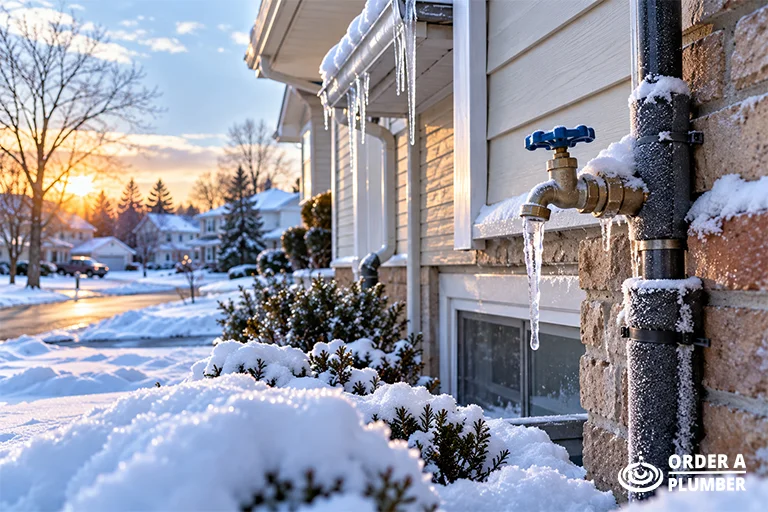
Winter in Long Island can bring freezing temperatures that put your home’s plumbing under pressure. When water inside a pipe freezes, it expands and can create enough pressure to crack or burst the pipe. A damaged pipe can quickly lead to water leaks, property damage, and unexpected repair costs.
Taking a few preventive steps before winter arrives can help protect your plumbing. Here are practical ways Long Island homeowners can prevent frozen pipes before temperatures drop.
How to Prevent Frozen Pipes Long Island
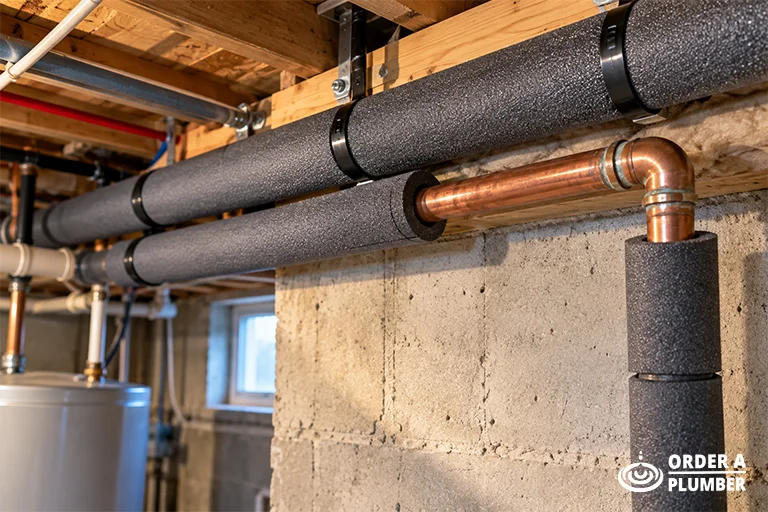
Insulate Exposed Pipes
Pipes located in unheated areas are especially vulnerable during freezing weather. Check pipes in basements, crawl spaces, garages, attics, and areas near exterior walls.
Foam pipe insulation can help protect exposed plumbing from cold temperatures. Pay special attention to pipes with little insulation or those exposed to drafts.
Seal Gaps and Cold Air Leaks
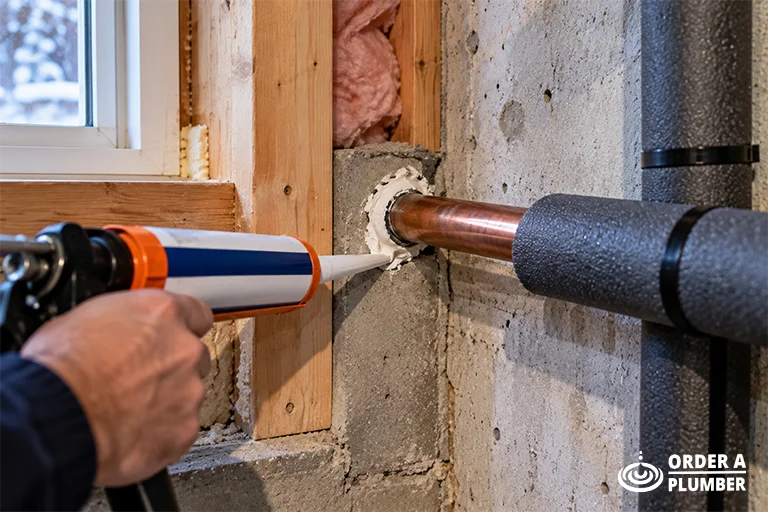
Cold air entering through gaps around windows, doors, foundations, and plumbing openings can make nearby pipes more likely to freeze.
Before winter, inspect areas where pipes pass through walls or floors. Seal noticeable gaps with appropriate caulk or insulation to help keep temperatures warmer around your plumbing.
Keep Your Home Warm
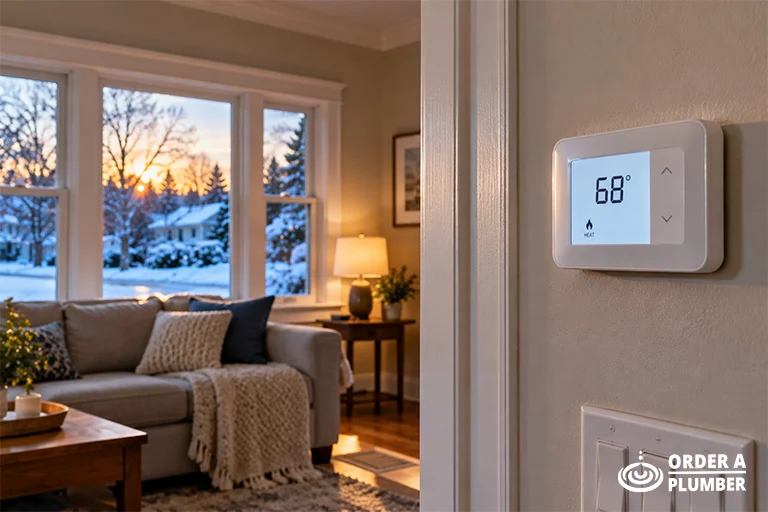
Maintaining a consistent indoor temperature is another important step Long Island homeowners should consider to prevent frozen pipes. Avoid turning the heat off completely when leaving your home during freezing weather.
If you are going away for several days, keep your heating system running at a safe temperature to reduce the chance of indoor plumbing becoming exposed to freezing conditions.
Open Cabinets Under Sinks
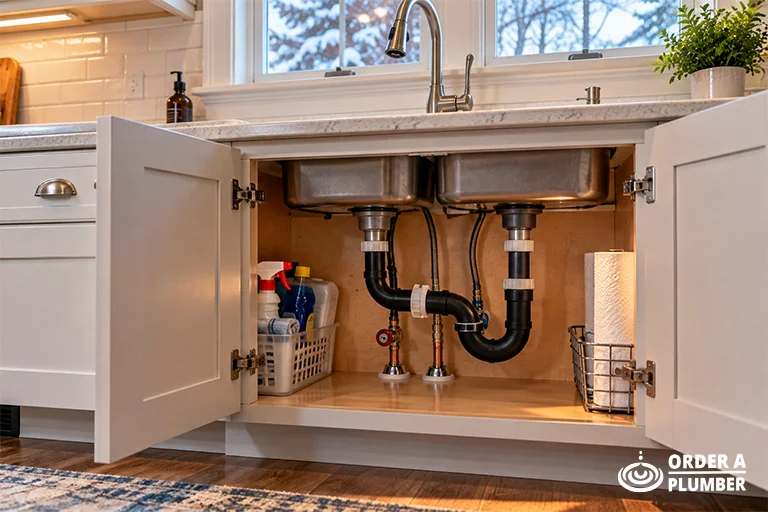
Pipes beneath kitchen and bathroom sinks can get cold, especially when cabinets are against exterior walls. Opening cabinet doors in extremely cold weather can let warmer air circulate the pipes.
Move household cleaners and other potentially harmful products somewhere safe if children or pets are present.
Protect Outdoor Plumbing
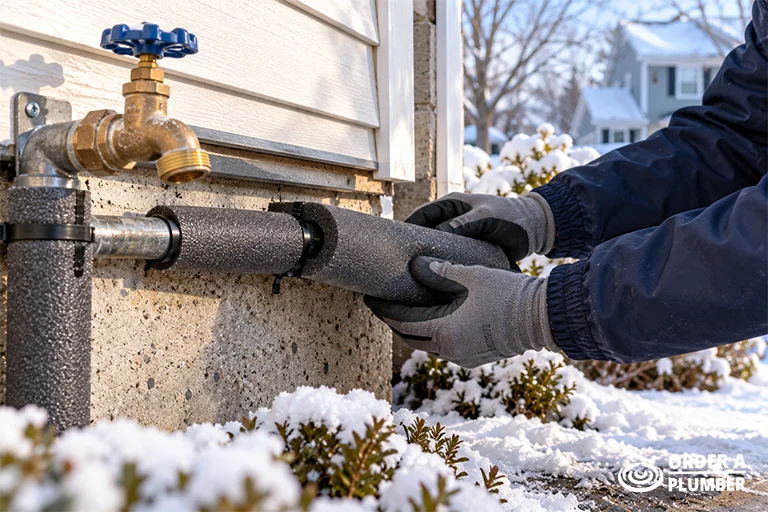
Before winter arrives, disconnect garden hoses from outdoor faucets. If your plumbing system has shut-off valves for exterior faucets, close them and drain the remaining water when possible.
Outdoor plumbing is directly exposed to cold weather, making it particularly susceptible to freezing.
Let Vulnerable Faucets Drip
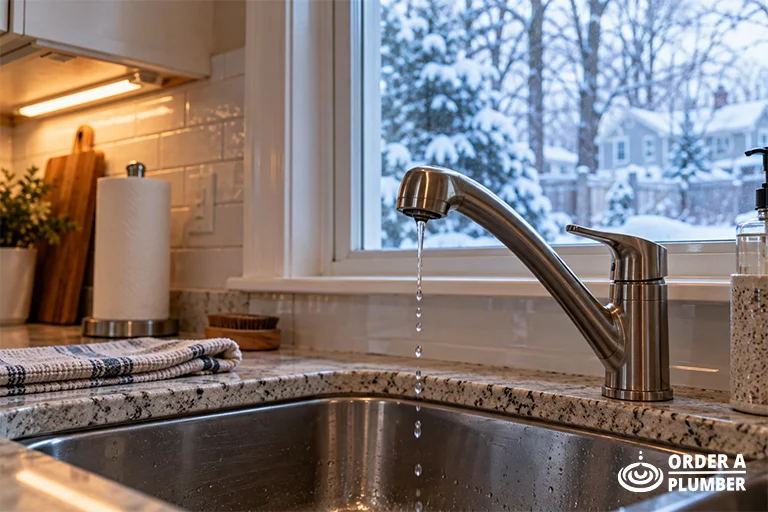
During periods of severe cold, allowing a small amount of water to flow through a vulnerable faucet may help reduce pressure inside the pipe. This can help with plumbing in colder areas of the home.
A dripping faucet should not replace proper insulation and heating. It is simply one additional precaution homeowners can take during extreme cold.
Know Your Main Water Shut-Off
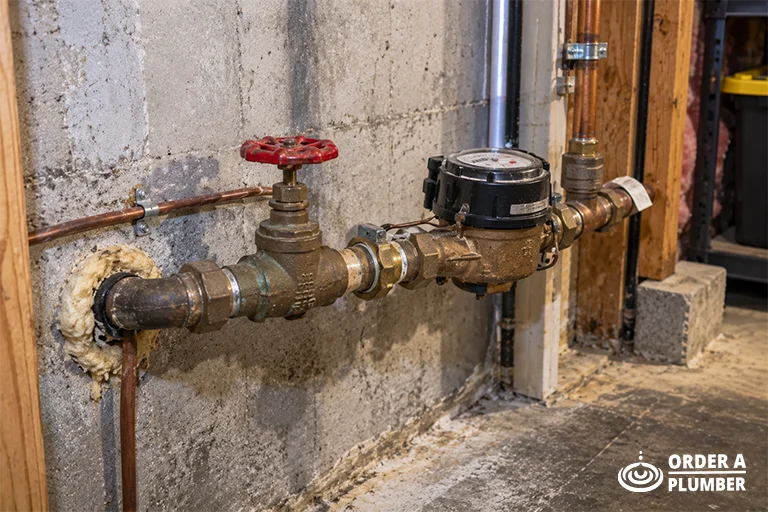
Even with preparation, frozen pipes can sometimes occur. Every homeowner should know where the main water shut-off valve is located.
If a pipe bursts, shutting off the water quickly can reduce the amount of water entering your home while you arrange professional help.
Watch for Warning Signs
Reduced water flow, unusual pipe noises, frost on exposed plumbing, or a faucet that suddenly stops producing water can indicate a frozen pipe.
Never use an open flame to thaw a frozen pipe. Direct heat can damage the plumbing and create a serious fire hazard. If you suspect a pipe has frozen, contact a professional plumber for assistance.
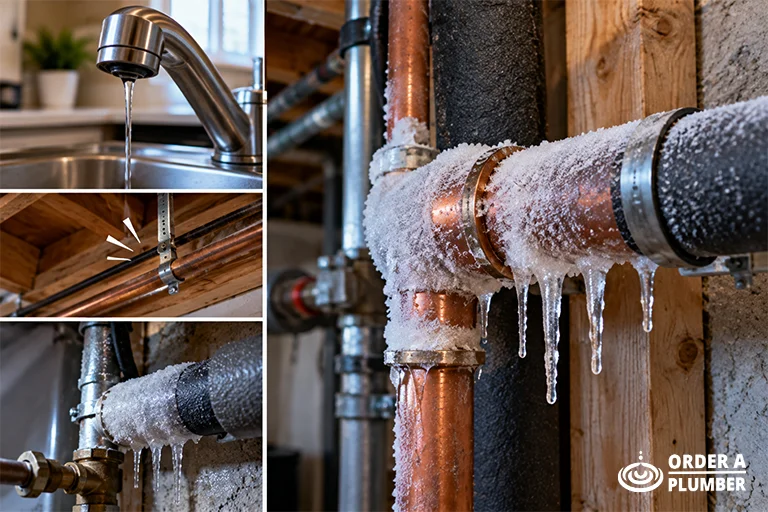
Prepare to Prevent Frozen Pipes Long Island
Taking action before freezing temperatures arrive is one of the easiest ways to protect your plumbing during winter. Insulating exposed pipes, sealing drafts, maintaining indoor heat, and protecting outdoor plumbing can all help reduce the risk.
If you need help preparing your plumbing for winter or have a frozen or damaged pipe, Order A Plumber can inspect the issue and recommend the appropriate solution.
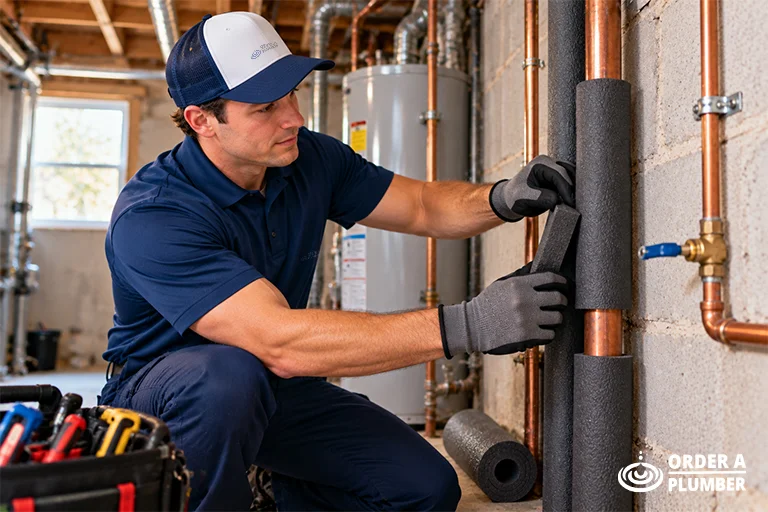
Final Thought
Winter plumbing problems can become expensive if left unaddressed. A little preparation before temperatures fall can help protect your pipes and reduce the risk of water damage throughout the colder months.
FAQs
How can I prevent frozen pipes in Long Island?
Insulate exposed pipes, seal drafts, maintain consistent indoor temperatures, protect outdoor faucets, and monitor vulnerable plumbing during freezing weather.
Which pipes are most likely to freeze?
Pipes located in unheated areas, exterior walls, crawl spaces, garages, basements, and poorly insulated spaces are generally more vulnerable.
Should I leave a faucet dripping during freezing weather?
A small, steady flow of water may help reduce pressure in vulnerable pipes during severe cold. However, use it alongside proper insulation and heating.
What should I do if I think a pipe is frozen?
Do not use an open flame to thaw it. Turn off the water if a burst is possible and contact a professional plumber to inspect the pipe safely.
When should I prepare my plumbing for winter?
Inspect and protect vulnerable plumbing before the first major freeze, rather than waiting until temperatures drop below freezing.