
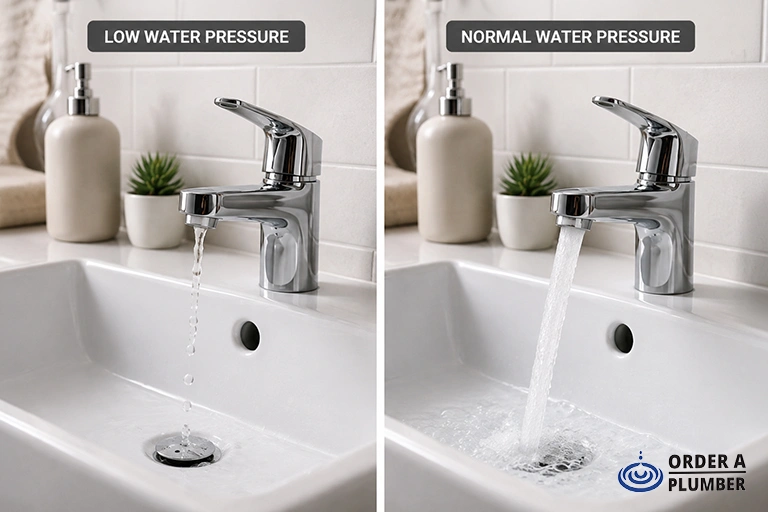
You turn on the shower in the guest bathroom, and it barely trickles out, but the master bath down the hall runs strong. If that sounds familiar, you’re probably looking for low water pressure repair Suffolk County homeowners can trust. The cause is almost always local to that one room, not your whole plumbing system.
Whole-House vs. One-Bathroom Problems
If all the faucets in the house have weak pressure, the problem is most probably a faulty pressure regulator or a main shut-off valve that is only partly open. If one bathroom has low pressure but the rest of the house is normal, the reason why all the taps in the house are weak is generally because of a faulty pressure regulator or because the main shut-off valve is only partly open. If only one bathroom is affected, the problem is less serious—most likely the fixtures themselves, the valve in that room, or a short length of pipe. That’s the good point: the repair will be more limited in scope.
Common Causes of Low Water Pressure in One Bathroom
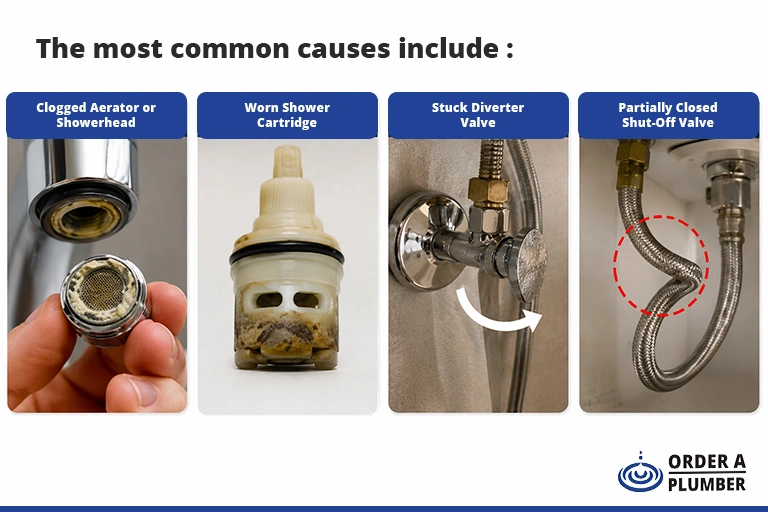
Clogged aerator or showerhead. Hard water causes calcium deposits to build up inside the mesh screen or in the holes of the nozzle, gradually restricting the flow. This is generally the reason when only the sink or shower is affected and not both.
Worn shower cartridge. Most single-lever showers have a cartridge used to regulate both temperature and flow rate. Even when the valve appears to be in good condition from the outside, the cartridge will eventually wear out or accumulate mineral deposits. A varying water pressure when you are adjusting the temperature is a typical indication.
Stuck diverter valve. In tub-shower combos, a worn diverter can leak water into both pathways at once, splitting pressure between two outlets instead of sending full flow to one.
Partially closed shut-off valve. A valve touched during a past repair and not turned back fully open will quietly restrict flow to just that fixture, without affecting anything else in the house.
Suffolk County’s Older Pipes and Hard Water
In Suffolk County, the presence of older houses and the fact that the water is hard adds another factor. A great many of the houses still have galvanized steel pipes, and these pipes rust and become narrower as time goes on – therefore, if the old pipes serve one bathroom while the rest of the house has been modernized, that bathroom will remain noticeably weaker. Moreover, hard water clogs the aerators and showerheads more quickly, particularly in bathrooms that are not used very often.
What a Diagnosis Involves
A proper visit usually checks things in this order:
- Test the sink and shower separately
- Look for visible buildup in the fixtures
- Check that shut-off valves turn fully
- Inspect the cartridge and diverter if the shower is affected
- Run a flow test if pressure dropped gradually, which often points to an older or corroded pipe.
Cost to Fix Low Water Pressure in Suffolk County
Cost depends on what’s causing the drop:
- Aerator or showerhead replacement: $75–$150
- Cartridge or diverter repair: $150–$400
- Shut-off valve replacement: $125–$250
- Galvanized pipe section replacement: $500 and up
- Minimum service fee: $89–$129
Fix It Yourself or Call a Plumber
You can usually handle it yourself if:
- The aerator or showerhead is visibly clogged
- Only the sink is affected, not the shower
- The fixture is easy to reach and simple to swap out
Call a plumber if:
- Pressure changes as you adjust the shower temperature
- The problem is likely inside the wall
- Your home is older and may still have galvanized pipe
- A fixture that was recently serviced starts acting up again
Why Homeowners Trust Order A Plumber Low Water Pressure Repair Suffolk County
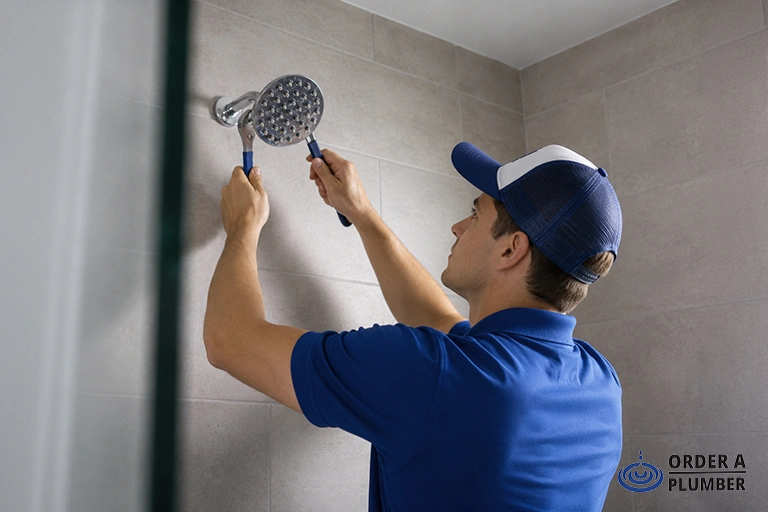
When you need low water pressure repair in Suffolk County, homeowners can rely on finding the real cause rather than replacing parts that may not be faulty. Order A Plumber’s experienced technicians inspect the fixtures, valves, and plumbing serving the affected bathroom to quickly identify the problem. Whether it’s a clogged showerhead, a worn cartridge, or aging pipes, we provide reliable repairs that restore normal water pressure and help prevent repeat issues.
Final Thought
Low water pressure in one bathroom is usually an indication of a localized plumbing issue, but failing to attend to it can result in more serious and costly repairs in the future. Whether the problem is a clogged fixture, a faulty valve, or aging plumbing, addressing it early helps restore normal water flow and prevents unnecessary damage. If you need Low Water Pressure Repair Suffolk County, Order A Plumber is ready to identify the issue and provide the right solution the first time.
| READY TO FIX IT RIGHT?Only one bathroom losing pressure? Order a plumber to find the cause and fix it in a single visit—whether that means a new fixture, a valve repair, or a look at your older piping. We serve homes across Suffolk County with same-day appointments. Call now: (631) 234-0687 • Request an estimate online. |
FAQ for Low Water Pressure Repair Suffolk County
Why is my shower pressure low but my sink is fine?
That generally indicates the problem lies with the shower rather than the entire water supply; the cause is most likely a blocked showerhead, mineral buildup, or a worn-out cartridge. Cleaning the showerhead is the easiest first step, and it solves the problem in many cases since mineral deposits build up gradually and block the small holes over time. However, if the pressure is still low after that, the cartridge is probably the source of the issue.
Does low water pressure in one shower mean I have a leak?
Not usually. A leak generally causes a drop in pressure in several outlets at the same time, not just in one shower. You should also look out for other indications such as water stains, damp areas on the walls or ceiling, or a water bill that is higher than normal. If none of these signs are present, it is unlikely that the leak is the cause.
How do I know whether the showerhead or the cartridge is damaged?
The two problems tend to show different signs:
- Showerhead: weak or uneven spray no matter the water temperature, and you can often see mineral deposits blocking the small holes if you look closely or remove it.
- Cartridge: pressure that changes as you adjust the temperature, water that surges or drops unexpectedly, or a problem that worsens slowly over several weeks or months rather than appearing all at once.
Paying attention to when the pressure drops and whether temperature changes affect it usually points to the right answer before a technician even arrives.
Can I fix low water pressure in my shower myself?
Sometimes. If the showerhead is clogged, soaking it in vinegar or simply replacing it often fixes the problem, and it’s a job most homeowners can do in a few minutes. With problems involving the cartridge, the diverter, or the pipes inside the wall, it is harder to diagnose them correctly without opening them up, so it’s better to leave these to a professional.
How much does it cost to fix low water pressure in Suffolk County?
The cost will vary according to the cause of the problem; replacing a showerhead or a valve usually costs less than $XXX, cartridge or diverter repairs amount to about $XXX to $XXX, and replacing the old galvanized pipe is the most expensive solution, often being $XXX or more depending on how much pipe has to be replaced.
Why is water pressure low in only one bathroom in my old house?
In older houses in Suffolk County, there are often sections that still have galvanized steel pipes, and because of their age, these pipes rust and become narrower from the inside. When one bathroom continues to use this old pipe while the rest of the house has been modernized, the bathroom will have reduced water pressure even though there seems to be no obvious problem. It is one of the more common reasons for this issue in older homes in the area.