
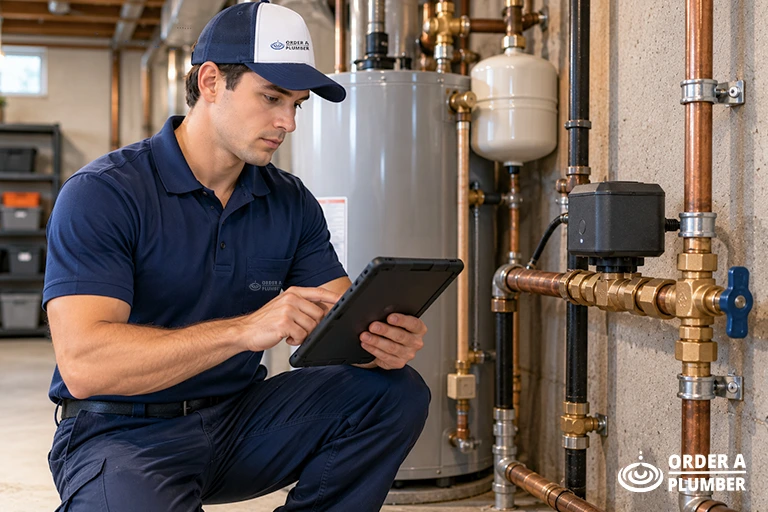
A hidden water leak can damage walls, ceilings, floors, and other parts of your home before you notice a problem. Even a small leak can increase your water bill and create damp conditions that encourage mold growth. Smart water leak detectors offer another way to spot potential leaks early and help homeowners respond before damage worsens.
These devices are useful near water heaters, sinks, washing machines, and other plumbing connections. Understanding how they work can help you decide whether they are a worthwhile addition to your home.
What Are Smart Water Leak Detectors?
Smart water leak detectors are electronic devices that detect moisture or unusual water activity. Basic models detect water on a surface, while advanced systems monitor water flow through your home’s plumbing.
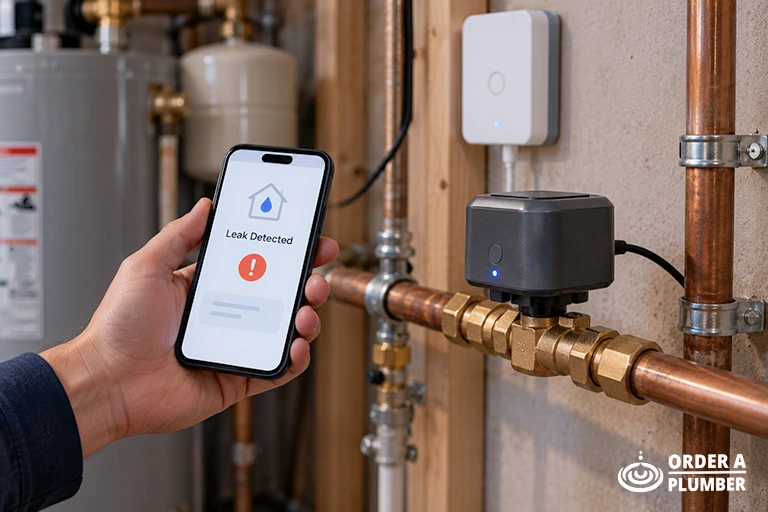
Depending on the model, a detector can alert your smartphone when it senses a leak. Some systems also connect to an automatic shutoff valve that stops the water supply when it detects a leak.
These features can help homeowners respond sooner, especially when a leak happens at home.
How Do Leak Detectors Work?
Smart leak detection systems use different methods to identify potential plumbing problems.
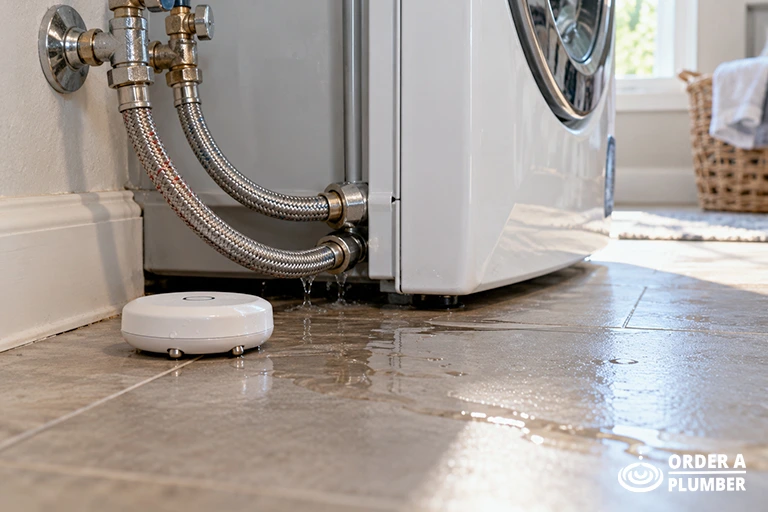
- Moisture sensors: Detect water near sinks, toilets, water heaters, and washing machines.
- Water flow monitoring: Identifies unusual or continuous water usage that may indicate a leak.
- Mobile notifications: Sends alerts through a smartphone app so you can investigate the problem.
- Automatic shutoff: Some systems close a connected valve to limit water loss when a leak is detected.
Not every device includes all these features. Check the manufacturer’s specifications before choosing a system, and remember that no detector can guarantee it will identify every leak.
Where Should You Install Water Leak Detectors?
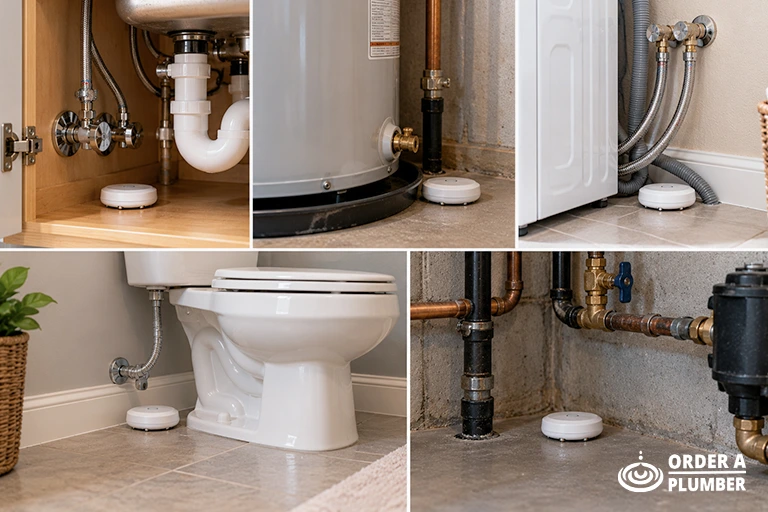
Strategic placement helps sensors identify leaks before water spreads and damages surrounding materials. Consider these common locations:
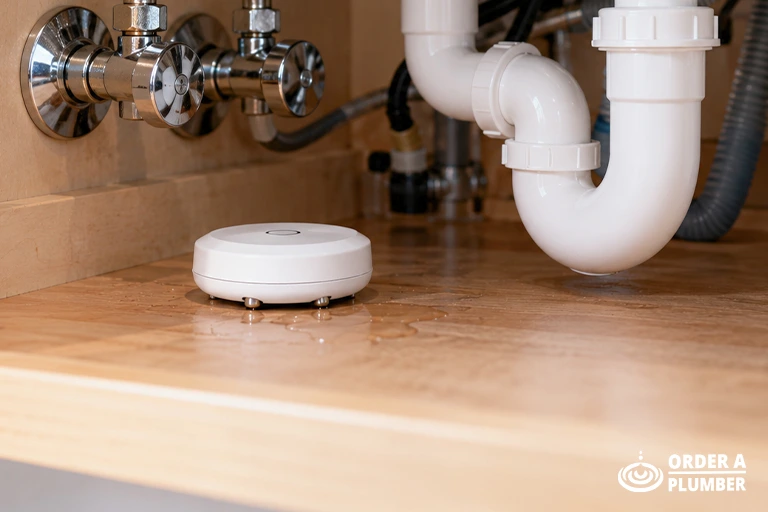
- Under kitchen and bathroom sinks: Supply lines and connections can leak inside cabinets.
- Near water heaters: Leaks from tanks, valves, or fittings may collect on the floor.
- Behind washing machines: Hoses and connections can deteriorate or fail.
- Near toilets: Leaks around the base or supply connection can damage flooring.
- In basements and utility rooms: Exposed pipes and plumbing equipment may develop unnoticed leaks.
Larger homes may benefit from several sensors. Follow installation instructions and choose locations where leaking water is likely to reach the sensor.
Can Smart Leak Detectors Prevent Water Damage?
Smart leak detectors can help reduce water damage by providing an early warning. A prompt alert allows you to investigate, shut off the water when appropriate, and arrange repairs.
However, effectiveness depends on sensor placement, connectivity, device reliability, and how quickly you respond. A sensor may not detect a leak behind a wall or outside its coverage area.
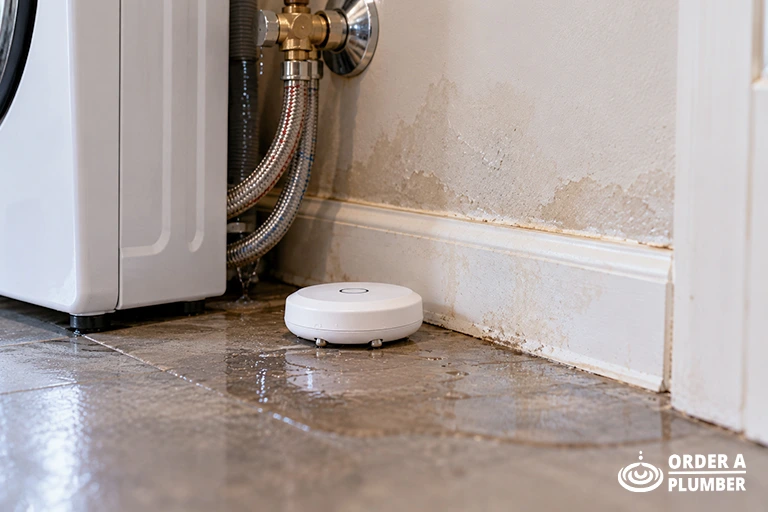
Watch for other warning signs, including unexplained increases in your water bill, damp patches, peeling paint, musty odors, and dripping sounds when fixtures are turned off. If you notice these symptoms, consider professional water leak detection services to help locate the source.
When Should You Call a Professional Plumber?
Smart detectors are useful monitoring tools, but they cannot replace a plumbing inspection or repair. Contact a plumber if you notice recurring moisture, unexplained water usage, reduced water pressure, or signs of a hidden pipe leak.
If water is spreading near electrical equipment, avoid entering the affected area. Shut off the water supply only if you can do so safely, and seek professional assistance.
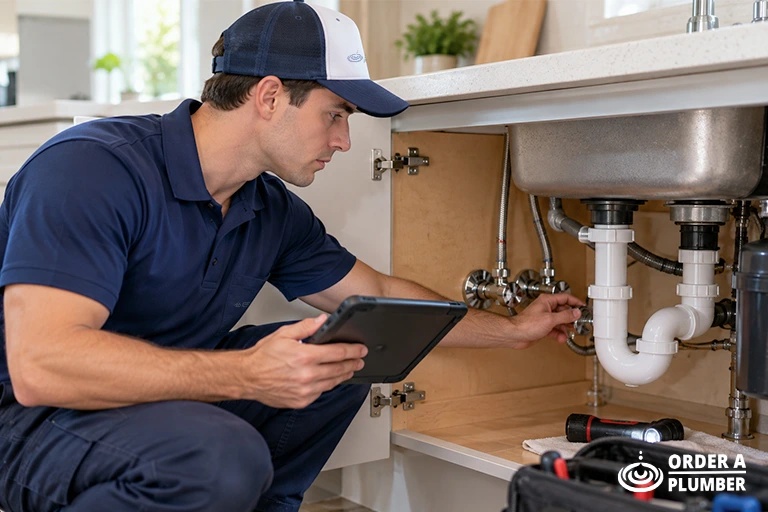
Order A Plumber provides leak detection and repair services to help homeowners identify hidden plumbing problems. Routine plumbing maintenance can also help identify developing issues before they cause more disruption.
Protect Your Home With Order A Plumber
Smart water leak detectors provide an additional layer of protection by alerting you to potential leaks. Choosing the right devices, installing sensors in vulnerable areas, and responding promptly can reduce the risk of costly water damage.
If you suspect a hidden leak or notice signs of moisture around your home, contact Order A Plumber to discuss your plumbing concerns. Our team can help identify the problem and recommend an appropriate solution.
Contact Order A Plumber today to schedule leak detection service and help protect your home from preventable water damage.
FAQ for Smart Water Leak Detectors
1. What are smart water leak detectors?
Smart water leak detectors detect moisture or unusual water flow and alert homeowners so they can catch potential leaks early.
2. Where should I install smart water leak detectors?
Install sensors near sinks, toilets, water heaters, washing machines, and other areas where plumbing leaks may occur. Follow the manufacturer’s instructions.
3. Can smart water leak detectors prevent water damage?
They can help limit damage by alerting you early. Some models automatically shut off the water supply, but no system guarantees complete protection.
4. Do smart water leak detectors require professional installation?
Basic battery-powered sensors are often suitable for DIY installation. Whole-home systems with automatic shutoff valves may require professional installation.
5. What should I do if my detector sends a leak alert?
Check the area safely and shut off the water if necessary. If you cannot locate the source, contact a plumber for inspection and repair.
6. When should I contact Order A Plumber for leak detection?
Contact Order A Plumber if you notice unexplained increases in your water bill, damp patches, persistent moisture, or recurring leaks. Professional leak detection can help identify the source.