
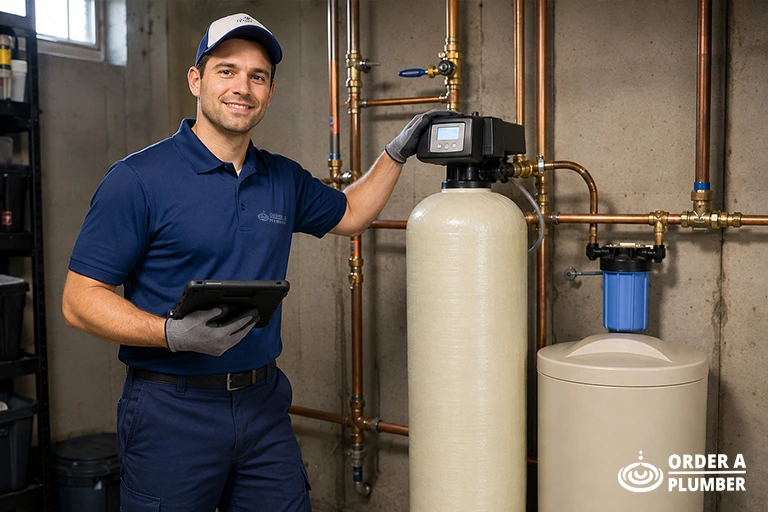
Hard water is a common concern for homeowners and affects more than just how water feels on your skin. Minerals like calcium and magnesium can build up inside pipes, faucets, showerheads, and water-using appliances. Over time, this buildup makes cleaning harder and may cause plumbing maintenance issues.
For homeowners dealing with persistent hard water, Water Softener Installation Suffolk County offers a practical solution. Order A Plumber helps homeowners understand their plumbing needs and find the right way to improve water quality.
What Is a Water Softener?
A water softener is a system designed to reduce hardness-causing minerals in household water. Traditional salt-based softeners use an ion exchange process to replace calcium and magnesium ions with sodium or potassium ions.
When hard water enters the system, the minerals are captured by resin inside the softener. The treated water then continues through the home’s plumbing system.
Before installing a water softener, homeowners should have their water tested. Knowing the hardness level and overall water quality helps determine the appropriate type and size of system.rd Water
Not sure whether your home needs a water softener? Several signs may indicate hard water.
Common signs include:
- White or chalky deposits around faucets and fixtures
- Spots on glassware and dishes
- Mineral buildup around showerheads
- Soap that does not lather easily
- Dry-feeling skin after bathing
- Laundry that feels stiff after washing
- Scale buildup inside water-using appliances
These issues do not appear overnight. Mineral deposits accumulate gradually, making them easy to overlook until noticeable.

Benefits of Water Softener Installation
Installing a properly sized water softener provides several household benefits. By reducing hardness minerals, it helps limit scale buildup throughout the plumbing system.
A water softener also helps water heaters, washing machines, dishwashers, and other appliances that use water. Less mineral buildup makes cleaning and maintenance easier.
Many homeowners notice soaps and detergents work better with softened water. Shower doors, sinks, and fixtures are easier to keep clean due to less mineral residue.
However, a water softener is not a substitute for a complete water filtration or purification system. The right equipment depends on what is present in the home’s water.

How Much Does Water Softener Installation Cost in Suffolk County?
The cost of water softener installation varies significantly between homes. Factors influencing the price include system type and capacity, plumbing configuration, installation location, labor, and any extra work needed.
Homeowners should also consider ongoing costs. Salt-based systems require regular salt replacement and periodic maintenance; other systems have different needs.
Getting a professional assessment before purchase helps homeowners understand installation needs and avoid choosing equipment that is too small or too large for their household.
No single water softener suits every home. Household size and daily water use are key when determining system capacity.
Water hardness is another key factor. A professional water assessment can provide useful information when selecting equipment.
Homeowners should compare regeneration methods, maintenance, warranty, salt usage, and installation needs. Choosing based only on purchase price may not offer the best long-term value.

What Happens During Installation?
Professional water softener installation in Suffolk County begins with evaluating the home’s plumbing and selecting an appropriate location for the equipment.
The plumber connects the system to the home’s water supply and handles drainage and plumbing connections. After installation, the system is tested to ensure proper operation.
Professional installation can also help ensure that the equipment is properly connected and configured for the home’s plumbing setup.
Keep Your Plumbing Working Efficiently
Hard water affects fixtures, appliances, and daily tasks. A properly selected and installed water softener reduces mineral buildup and eases routine plumbing maintenance.
If you are considering a water softener in Suffolk County, Order A Plumber can help assess your plumbing needs and find the right solution. A professional assessment is a good start to understand water quality, installation needs, and options.

Final Thought
A water softener can make a noticeable difference in a home affected by hard water and mineral buildup. The right system depends on your water quality, household needs, plumbing setup, and maintenance preferences. Before investing in a system, have your water tested and get professional advice to help you make a practical choice. For homeowners considering water softener installation in Suffolk County, Order A Plumber can help assess your plumbing needs and recommend the right next step.
5 FAQs: Water Softener Installation Suffolk County
1. What are the signs that my home needs a water softener?
Common signs of hard water include white mineral deposits around faucets, spots on dishes and glassware, scale buildup on showerheads, dry-feeling skin, and soap that does not lather easily.
2. How much does water softener installation cost in Suffolk County?
The cost varies depending on the type and size of the system, water hardness, plumbing configuration, installation requirements, and labor. A professional assessment can provide a more accurate estimate for your home.
3. How does a water softener help protect my plumbing?
A water softener reduces hardness-causing minerals such as calcium and magnesium. This can help minimize scale buildup inside plumbing fixtures, pipes, water heaters, and water-using appliances.
4. How do I choose the right water softener for my home?
Consider your household size, daily water usage, water hardness, system capacity, regeneration method, maintenance needs, and warranty. Testing your water first can help determine which system is appropriate.
5. Does a water softener require regular maintenance?
Yes. Maintenance depends on the type of system. Salt-based softeners generally require regular salt replacement and periodic inspection. Following the manufacturer’s maintenance recommendations can help keep the system operating properly.