
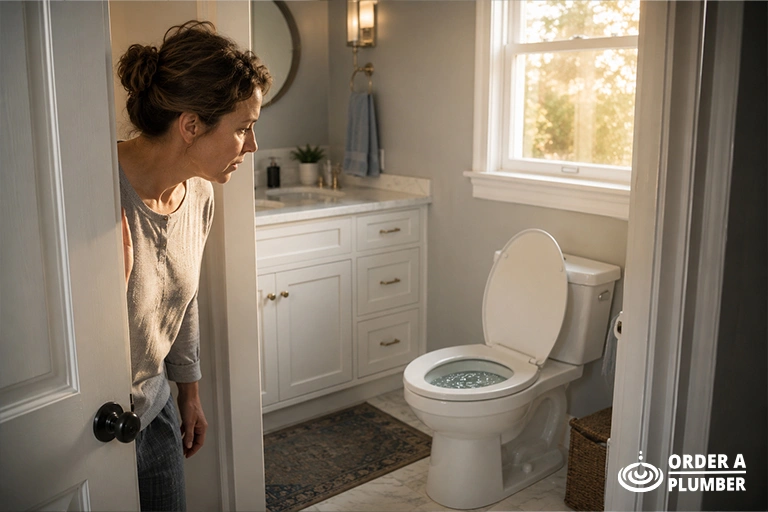
A constantly running toilet may seem like a small problem, but it can waste a lot of water and increase your monthly utility bill. Many homeowners ignore the issue at first because the toilet still works, but a running toilet often points to a plumbing problem that should be fixed quickly. The good news is that some toilet problems are easy to identify and repair.
In this guide, we will explain the most common reasons why a toilet keeps running, simple ways to fix it, and when it is best to call a professional like Order A Plumber for help.
Why Is Your Toilet Constantly Running?
A toilet runs when water keeps flowing from the tank into the bowl even after flushing. Normally, the tank should refill and stop automatically. If it does not stop, one or more toilet parts may not be working correctly.
A running toilet can waste hundreds of gallons of water every day, which is why fixing the problem early is important.
Some of the most common causes include:
- Faulty flapper
- Incorrect float level
- Broken fill valve
- Damaged overflow tube
- Loose or tangled chain
- Mineral buildup inside the tank
Understanding these problems can help you decide whether it is a quick DIY fix or time to contact a professional plumber.
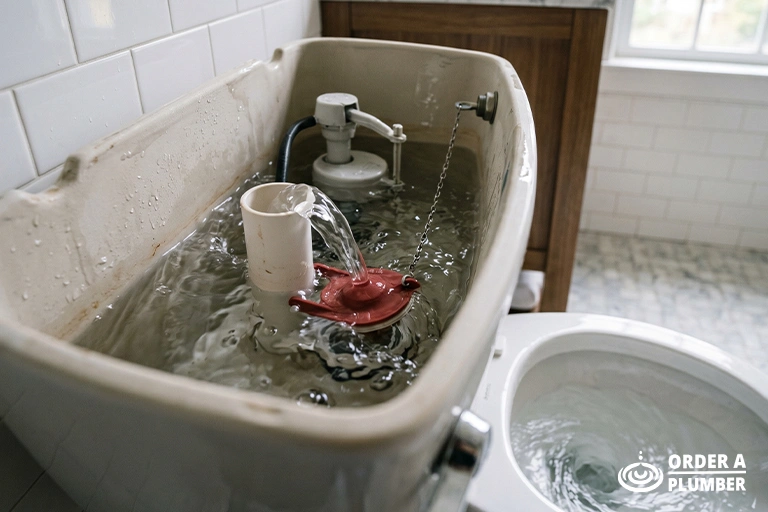
1. Worn-Out Toilet Flapper
The toilet flapper is one of the most common reasons a toilet keeps running. The flapper is the rubber seal at the bottom of the tank. After flushing, it should close tightly to stop water from flowing into the bowl.
Over time, the flapper can crack, warp, or wear out.
Signs of a Bad Flapper
- Constant trickling water sound
- Toilet randomly refilling
- Water leaking into the bowl
Easy Fix
Turn off the water supply, remove the old flapper, and replace it with a new one from a hardware store. This is usually an affordable and simple repair.
If the problem continues even after replacing the flapper, the team at Order A Plumber can inspect the toilet and identify deeper plumbing issues before they become expensive repairs.
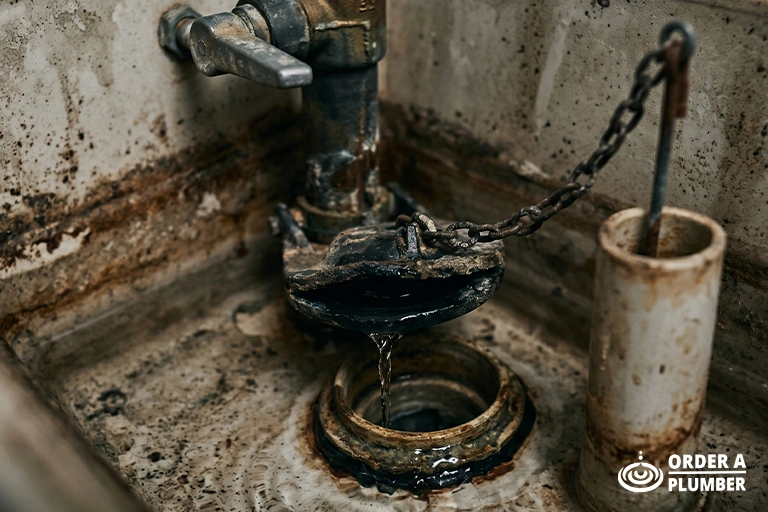
2. Float Is Set Too High
The toilet float controls the water level inside the tank. If the float is too high, water keeps flowing into the overflow tube, causing the toilet to run continuously.
Signs of a High Float
- Water level near the top of the tank
- Continuous water movement
- Toilet never fully stops refilling
Easy Fix
Adjust the float lower using the adjustment screw or clip inside the tank. Once lowered, the water should stop at the correct level.
This small adjustment often solves the issue quickly and helps reduce unnecessary water waste.
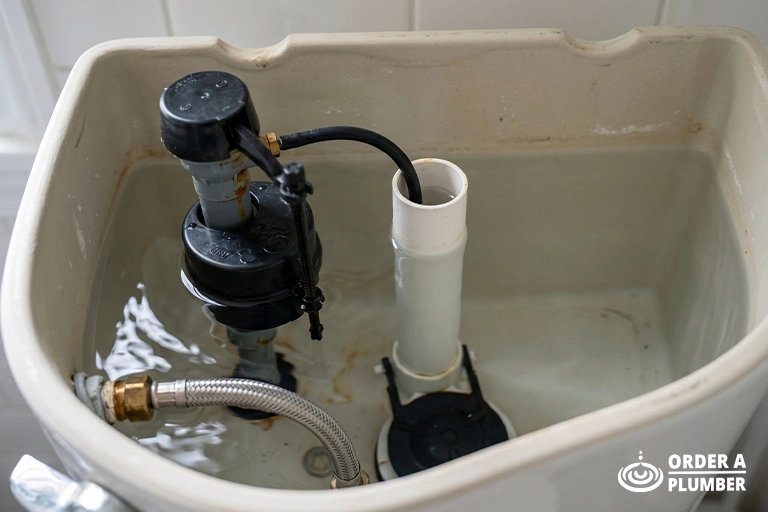
3. Faulty Fill Valve
The fill valve controls how water enters the toilet tank. If it becomes old or damaged, it may continue filling the tank even when it is already full.
Signs of a Bad Fill Valve
- Hissing sounds from the toilet
- Slow tank refill
- Water constantly running
Easy Fix
Sometimes cleaning the valve helps, but older valves usually need replacement. A new fill valve is inexpensive and can improve toilet performance immediately.
If you are unsure how to replace plumbing parts safely, Order A Plumber offers professional toilet repair services that can save time and prevent accidental damage.
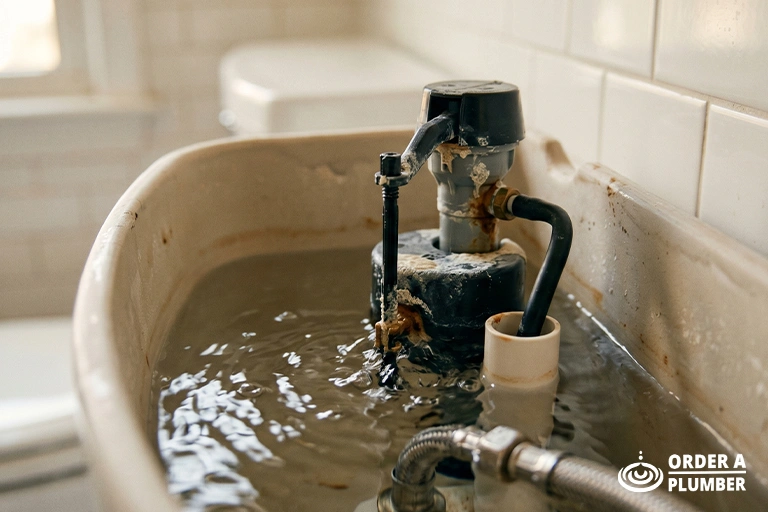
4. Loose or Tangled Toilet Chain
The chain inside the tank connects the handle to the flapper. If the chain is too short, too long, or tangled, the flapper may not close properly.
Signs of Chain Problems
- Handle feels stuck
- Toilet keeps running after flushing
- Flapper does not seal completely
Easy Fix
Open the tank lid and check the chain length. Adjust it so it has slight slack without getting tangled.
This is one of the easiest DIY toilet repairs homeowners can try themselves.
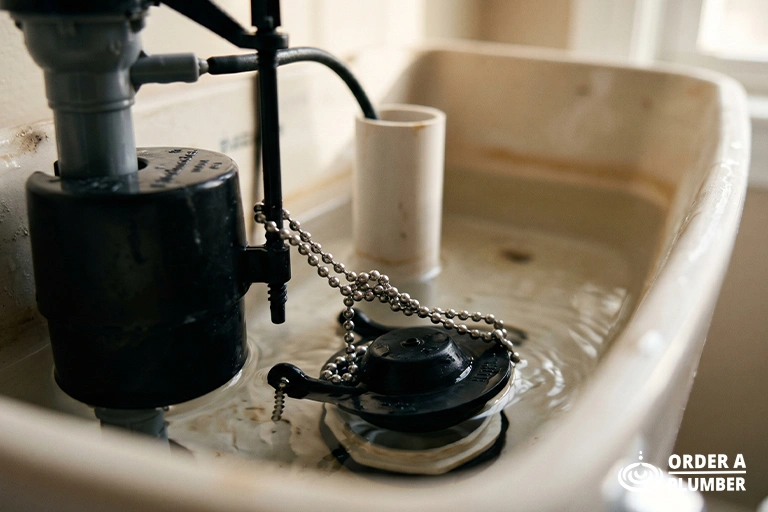
5. Damaged Overflow Tube
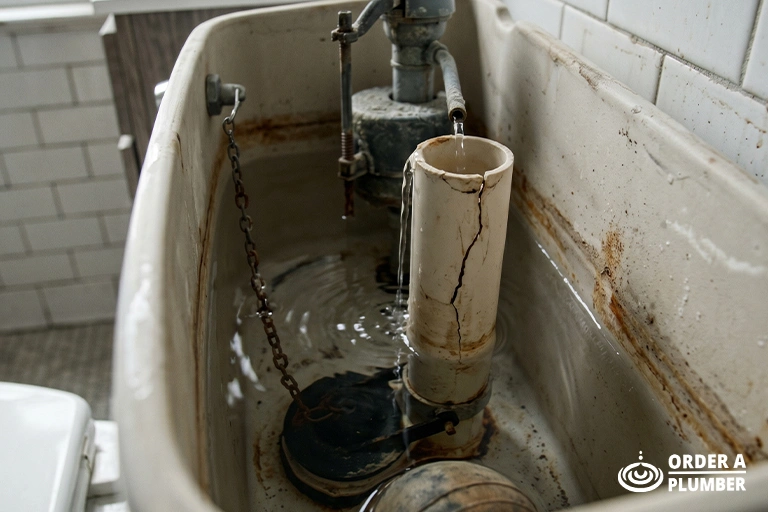
The overflow tube prevents the toilet tank from overflowing. If it becomes cracked or damaged, water may continuously drain into the bowl.
Signs of Overflow Tube Issues
- Water constantly flowing into the tube
- Toilet runs even after adjustments
- Visible cracks inside the tank
Easy Fix
A damaged overflow tube usually needs replacement. Since replacing internal toilet components can be tricky, professional plumbers can ensure the repair is done correctly.
Our experts at Order A Plumber can quickly diagnose overflow issues and restore your toilet’s efficiency.
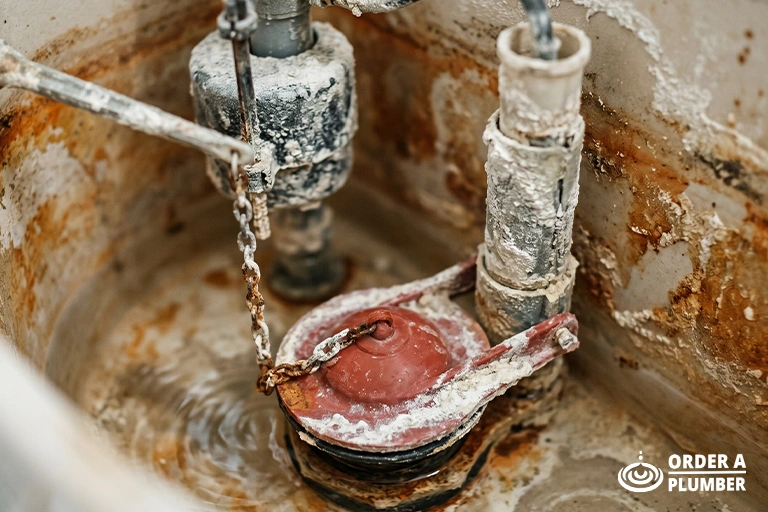
6. Mineral Buildup and Hard Water Problems
Homes with hard water often experience mineral buildup inside toilet components. Calcium deposits can stop valves and flappers from sealing correctly.
Signs of Mineral Buildup
- White residue inside the tank
- Poor flushing performance
- Toilet parts wearing out faster
Easy Fix
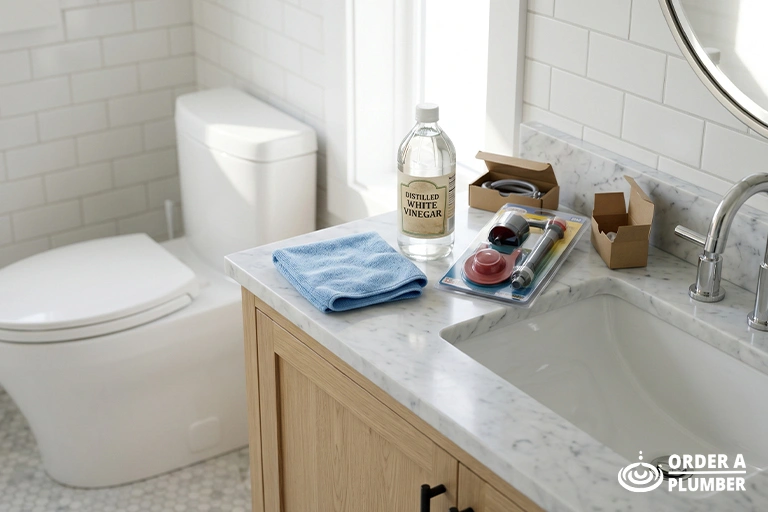
Clean affected parts using vinegar or a descaling cleaner. In severe cases, replacing damaged components may be necessary.
Regular plumbing maintenance can help prevent these issues from happening repeatedly.
How a Running Toilet Increases Your Water Bill
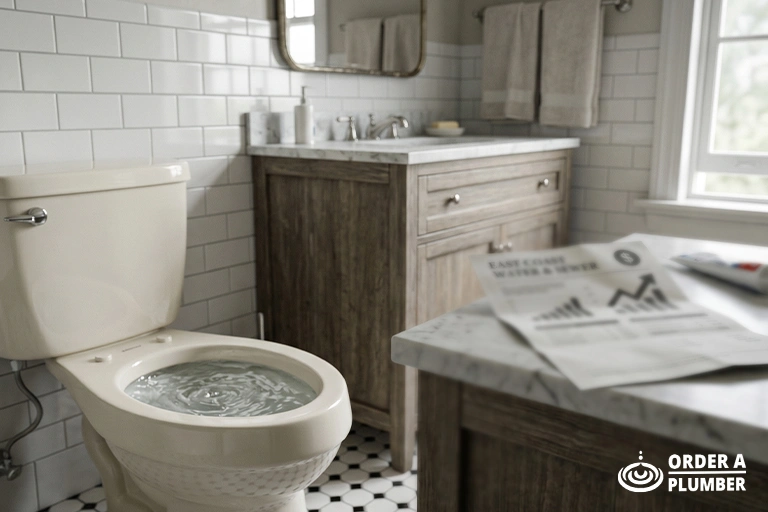
Many people do not realize how much water a leaking toilet wastes. A continuously running toilet can waste hundreds of gallons of water each day. Over time, this can significantly increase your utility costs.
Fixing the issue early helps:
- Save water
- Lower monthly bills
- Prevent bigger plumbing repairs
- Improve toilet efficiency
Even small toilet leaks should never be ignored.
When Should You Call a Professional Plumber?
Some toilet problems are simple DIY fixes, but others require professional attention. You should call a plumber if:
- The toilet still runs after replacing parts
- You notice leaks around the base
- Water pressure problems appear
- Multiple plumbing fixtures are affected
- The toilet frequently clogs or overflows
Professional plumbers can quickly identify hidden plumbing issues and prevent further damage to your home.
Our experienced team at Order A Plumber provides reliable plumbing inspections, toilet repairs, and maintenance services to help homeowners fix running toilets quickly and efficiently.
Tips to Prevent Toilet Problems
Regular maintenance can help avoid future toilet issues.
Helpful Prevention Tips
- Avoid flushing wipes or paper towels
- Check toilet parts regularly
- Clean mineral buildup from the tank
- Replace worn components early
- Watch for rising water bills
Keeping your toilet in good condition can extend its lifespan and reduce emergency plumbing repairs.
Final Thoughts
A running toilet is a common plumbing problem, but it should never be ignored. Whether the issue is a worn flapper, faulty fill valve, float problem, or mineral buildup, fixing the problem early can save water and money.
Some repairs are simple enough for homeowners to handle themselves, while more serious issues may require professional plumbing support. If your toilet continues running despite trying basic fixes, contacting a trusted company like Order A Plumber can help you get fast and reliable solutions before the problem becomes worse.
By understanding the common causes of a running toilet and taking quick action, you can keep your bathroom plumbing working smoothly and efficiently.
FAQ for Why Does My Toilet Keep Running?:
What are common causes of a running toilet?
A. Common causes include a worn flapper, faulty fill valve, high float level, loose chain, or damaged overflow tube.
What causes toilet problems?
A. Toilet problems are often caused by old parts, clogs, hard water buildup, leaks, or poor maintenance.
What damage can a running toilet cause?
A. A running toilet can waste water, increase water bills, and lead to leaks, mold, or plumbing damage over time.